「No matter how powerful your camera is, if you don’t understand light, your shots won’t turn out the way you imagined.
That said, lighting comes with a lot of technical terms, and most beginners feel like:
“This looks too complicated.” or “I have no idea what to buy.”
If that sounds like you — whether you’re just starting out or you’re ready to take your creative work seriously — there’s one brand I want you to know about:
Godox.
Godox stands out because it offers an incredible balance of:
- Affordable prices
- A wide product lineup
- Beginner-friendly usability
- Quality that holds up in professional use
That combination is why creators around the world keep choosing Godox.
In this series, I cover everything from the basics of light to choosing the right gear and practical shooting techniques — explained in a way anyone can follow.
Topics include:
- Types of strobes
- How to choose and use modifiers
- Practical lighting for indoor and outdoor shoots
- Recommended starter kits by use case
Everything you need to start working with Godox, all in one place.
“I want to get into lighting, but I don’t know where to start.”
“I want to find the right gear for my needs.”
“I want to take my work to the next level.”
This series is for you. By the time you finish reading, you’ll have a real understanding of how to work with light — and your creative options will open up in a big way.
Godox Flash Beginner’s Guide
- What Is Godox? Brand Features and Why Photographers Choose It
- What This Article Covers
- First — What Is Flash Photography?
- Before You Buy Your First Strobe
- Speedlight or Monolight — Which Should You Choose?
- My Top Recommendations (2 Models)
- Worth the Upgrade (1 Model)
- Why I Don’t Recommend Starting with the AD200 Pro
- If You’re Determined to Buy Just One Strobe and Want the Best
What This Article Covers
This article is written for anyone trying flash photography for the first time — specifically for portrait and people photography.
I’ll cover the basics of flash, explain the different types of strobes, and introduce a few Godox models that are approachable in terms of price: the Godox TT600, the Godox TT685II, and the Godox V1.
First — What Is Flash Photography?
Flash photography means using a brief, intense burst of light to brighten your subject.
It’s a bit like the light on your phone, but a camera flash is far more powerful — and you have much more control over the quality and direction of the light.

When Do You Actually Use Flash?
Flash isn’t just for making a photo brighter. It’s a tool for shaping the mood and feel of a photo through how you place the light.
With flash, you can create:
- Soft, flattering light
- Sharp, three-dimensional light with strong shadows
- A rim-light effect that makes hair glow from behind
These are all things that become easy once you understand flash.
Flash Photography in Practice
One common approach is to set your exposure for the background first, then use flash to fill in your subject.
(I wasn’t able to shoot examples for this article, so I’m using AI-generated images to illustrate.)


Flash doesn’t have to come from the front. You can position a strobe behind and to the side of your subject to simulate natural sunlight — making it look like they’re lit by the sun even when they’re not.
Place the strobe just outside the frame, angled from behind the subject, and fire it — the result looks like warm sunlight wrapping around them.


Set the background exposure, then adjust flash to get the brightness you want.
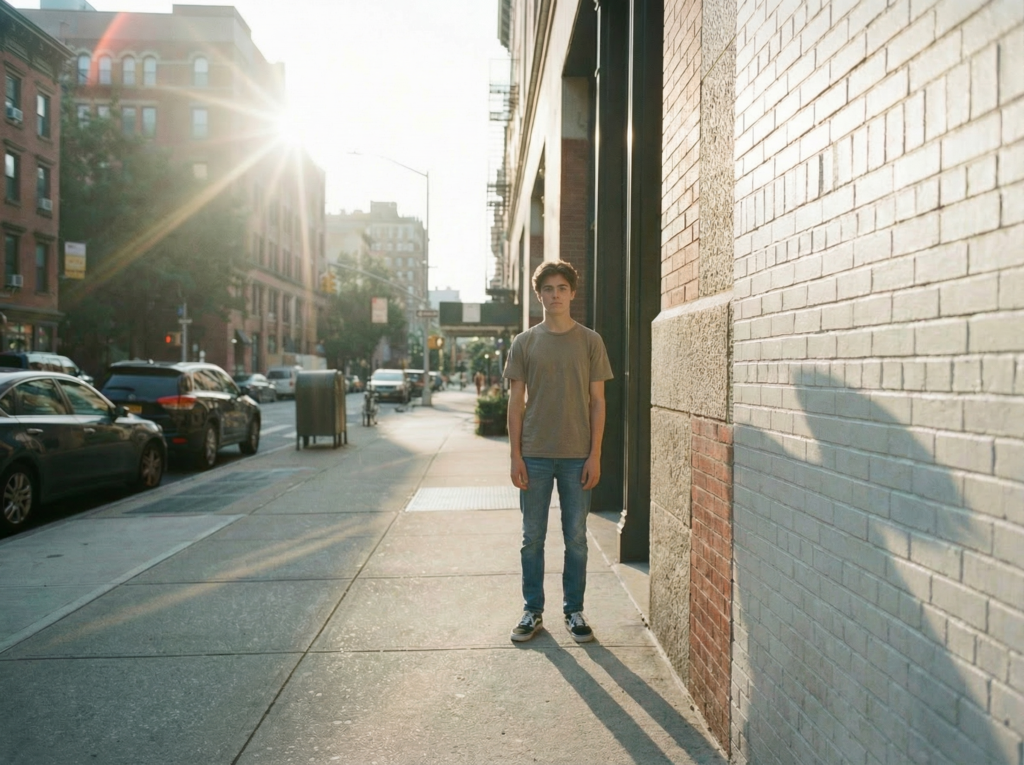
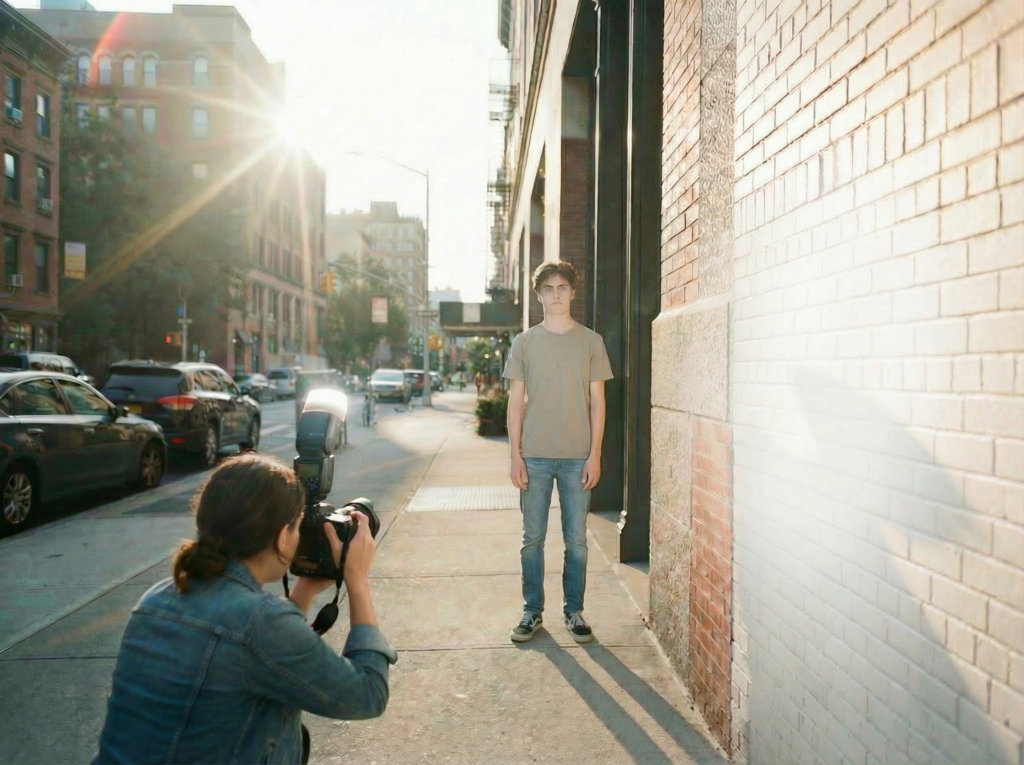
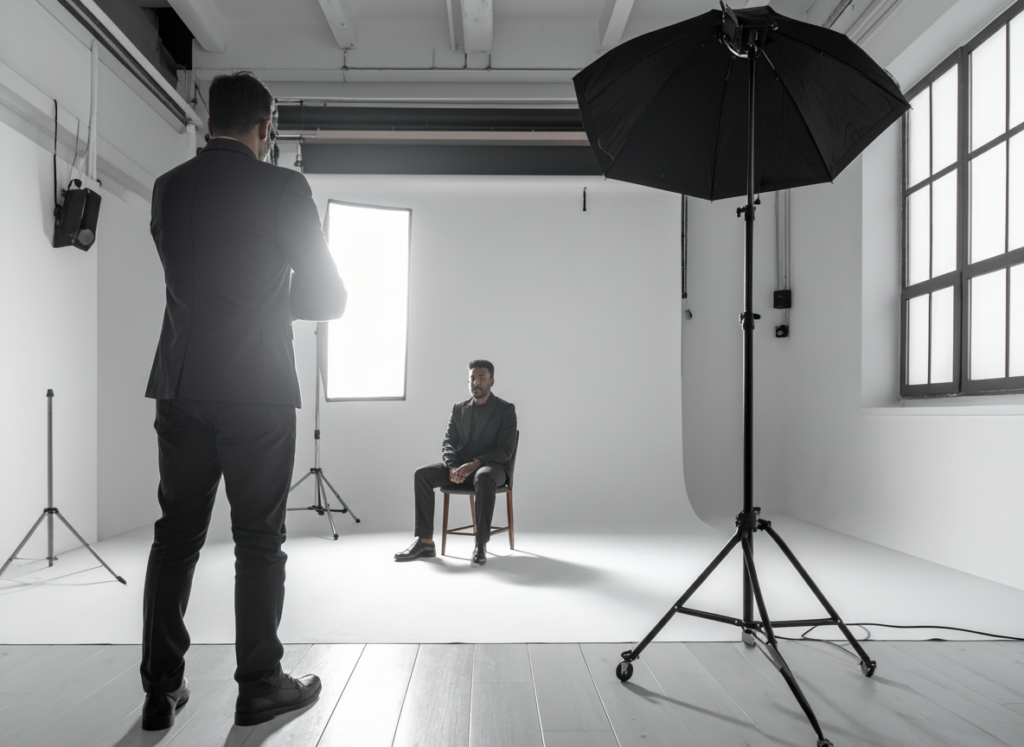
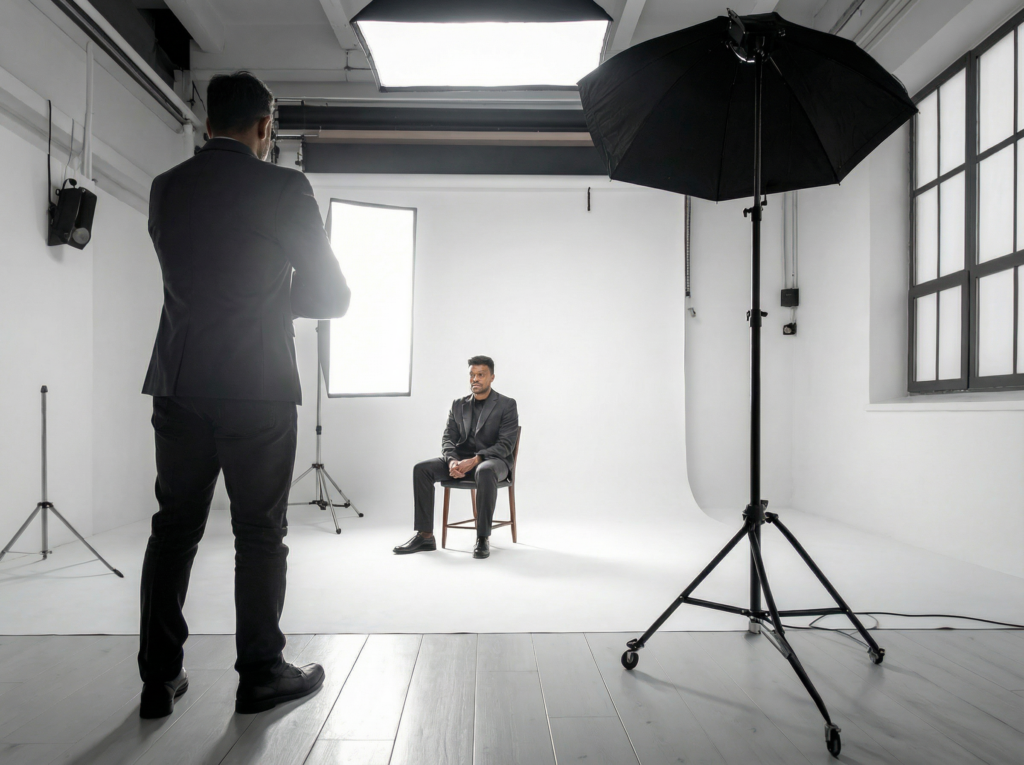
Neither approach is “correct” — it’s all about what look you’re going for.
Here’s another example: one image was shot using natural window light with a higher ISO, and the other was shot with ISO lowered to minimize sunlight and a softbox strobe positioned slightly to the front-left of the subject. Again, neither is wrong — they’re just different looks.


Once you can control flash, your creative range expands dramatically.
Before You Buy Your First Strobe
The Basics — Speedlights vs. Monolights
One of the first things beginners get confused about is the difference between a clip-on strobe (speedlight) and a monolight strobe.
Both produce light — but they’re quite different in terms of use, power, and handling. Here’s a breakdown using Godox as the example.
Clip-On Strobes (Speedlights)
A clip-on strobe is a compact flash that mounts directly on top of your camera. It’s also called a speedlight.
Godox models in this category include the TT600, TT350, TT685, and V1, among others.
Pros and Cons of Godox Speedlights
Pros
- Light and portable — Some models are small enough to toss in a bag without a second thought. Easy to handle for anyone.
- Affordable — Most models are in the $70–$250 range, making them a great first strobe.
- Great for shooting on the move — Since they mount directly to the camera, they’re ideal for moving around while shooting.
Cons
- TTL (auto-exposure) accuracy may be slightly lower compared to first-party strobes from camera manufacturers.
- Because Godox is so popular, you can run into signal interference when many people are using wireless flash at the same event.
Key Godox Speedlight Models
Here are some standout options that work well both indoors at rental studios and outdoors.
TT350 / V350
- Compact and lightweight
- Wireless triggering supported
- V350 uses a dedicated lithium-ion battery for faster recycle times
TT600
- Higher output than budget speedlights from camera manufacturers
- Much more affordable than manufacturer-branded speedlights
- Wireless triggering supported
TT685 / TT685II
- Supports ID assignment for wireless channels, making it ideal for events and group shoots where multiple flashes are in use
- TTL support means you can shoot flash without manually adjusting settings
V1
- Round flash head for more natural, even light spread
- High output for a speedlight
- Works with Godox AK-R1 accessories without an adapter — easy to attach color correction filters and modifiers
There are also casual models like the iM and iT series, and higher-end options like the V1 Pro and V100.
What is TTL?
TTL stands for “Through The Lens.” It means the camera reads the light through the lens and automatically sets the flash power. In simple terms: the camera figures out the right brightness for you. TTL is convenient, but it tends to produce a flat, snapshot-like result — so most portrait photographers prefer to set flash power manually.
Monolight Strobes
A monolight is a self-contained strobe with the power unit and flash head in one body. Traditionally, they were large studio fixtures.
Today, things have changed. Monolights have gotten smaller, more powerful, and many now run on lithium-ion batteries for wireless use. The line between speedlights and monolights has blurred — except that monolights can reach 200W+ output, which is hard to match in a speedlight form factor.
Godox monolights include battery-powered models (the AD series) and AC-powered models (MS, MK, QS series). Since AC-powered models are mainly for professional studios, I’ll focus on the AD series here.
The AD series ranges from the compact AD100 Pro (roughly the size of a soda can) to powerhouses like the AD600 Pro II and AD800 Pro.
Pros and Cons of Godox Monolights (AD Series)
Pros
- Serious output — High-powered flash gives you much more creative freedom with lighting
- Fast recycle times — The lithium-ion batteries in the AD series handle continuous shooting well
Cons
- Bigger and heavier than speedlights — harder to carry
- More expensive — Even the entry-level AD100 Pro starts around $200+, which is a higher barrier for beginners
- Requires setup — You’ll need a stand, softbox, or other modifiers to use them properly
Speedlight or Monolight — Which Should You Choose?
The answer depends on your purpose, budget, and how you’ll get your gear to locations.
Working professionals often use both. But if you’re shooting as a hobby, you probably want to avoid wasting money — and you need to think about storage space for your gear.
Let’s assume you’re a hobbyist who shoots portraits and is thinking about buying your first strobe.
Here’s what matters most:
- Wireless triggering — Most Godox speedlights (with a few exceptions) support wireless firing. Being able to position your light off-camera is where the real creative fun begins. This one is non-negotiable.
- Total cost, not just body price — If you’re shooting wirelessly, you’ll also need a stand, a wireless trigger, and accessories like color gels. Even if you go minimal, having a color correction filter or two makes a huge difference in what you can do on set. Think about the total cost of your kit, not just the strobe body.
- Multi-strobe wireless compatibility — Some compact models like the iM20 and iT22 don’t support wireless triggering with other Godox units. If portability is your top priority, that’s fine — but the use cases are limited, so I won’t be recommending them in this guide. (That said, if you only need flash for family trips and want something tiny and light, the Godox iT22 is genuinely great for that.)
My Top Recommendations (2 Models)
For a first strobe purchase, I recommend a speedlight — something you can mount on camera or put on a stand. That flexibility is really valuable.
1. For shooting outdoors or in a private studio rental
→ Godox TT600
The reason: it’s affordable enough to buy more than one. Having two strobes instead of one opens up your lighting options dramatically. If you’re watching your budget, the TT600 is a smart choice.
One note: if you’re shooting wirelessly in a shared studio with other photographers, you may run into interference issues — keep that in mind.
- Canon / Nikon / Panasonic / Fujifilm version: [link]
- Sony E-mount version: [link]
Please check the product page to confirm compatibility with your camera.
2. For events and portrait meetups
→ Godox TT685II
If you shoot at photo events, car shows, Comic Market, or portrait meetups, a speedlight is a valuable tool. And at some portrait events, you may even be able to set up a stand.
The key reason to choose the TT685II here: ID channel assignment. Godox is everywhere at these events. Without an ID set, your flash will fire every time someone else presses their shutter button. That’s genuinely frustrating — and very avoidable.
Worth the Upgrade (1 Model)
3. For continuous burst shooting
→ Godox V1
If you like to have your subject move and shoot several frames to get the one you want, the V1 is worth the extra investment. Unlike the TT600 and TT685, which run on AA batteries, the V1 uses a dedicated lithium-ion battery — which means faster recycle times and more consistent output during bursts.
Why I Don’t Recommend Starting with the AD200 Pro
The accessories add up fast: stands, brackets, umbrellas or softboxes, sandbags, color gels, triggers, and more.
You can shoot without all of it at first — but to really enjoy lighting, investing in accessories beats spending everything on the flash body itself. And if you have budget to spare, putting it into a nicer location or studio space will probably give you more satisfaction than a more expensive strobe.
To put it in perspective: three Godox V1 units from a major retailer runs around $550+, and adding three sets of accessories can easily push the total over $700. If that’s no problem for you, the Godox AD200 Pro or AD200 Pro II is an excellent choice — it’s compatible with a wide range of accessories and incredibly flexible.
That said — the TT685II and TT600 are more than capable of producing amazing shots when used creatively. Don’t overthink it. Just take the first step.
If You’re Determined to Buy Just One Strobe and Want the Best
If you’ve truly decided you’ll only ever own one flash and will never add more, the Godox V1 is my pick for speedlights.
The round flash head produces a slightly more natural, even spread of light when shooting on-camera — which is a small but real advantage.
That said, getting genuinely great results by pointing a bare flash directly at a subject is actually harder than it sounds. It takes some learning. That’s just the nature of flash photography.
Personally, I’d love to see you start with one speedlight — and eventually explore off-camera lighting. That’s where it gets really fun.
Godox Flash Beginner’s Guide
- What Is Godox? Brand Features and Why Photographers Choose It