SmallRig Cage Kit for Canon EOS R50V (5427): Hands-On Review and Power Setup Tips
In this post, I’m introducing one piece of video gear I use regularly: the SmallRig Cage Kit for Canon EOS R50V (5427).
The short version is this: the cage improves tripod workflow and rig expandability without killing the R50V’s portability, so I ended up keeping it mounted almost all the time.
Product info
Photo
- Brand: SmallRig
- Product name: Cage Kit for Canon EOS R50 V
- Model number: 5427
- Weight: 175 g
This is a cage for the Canon EOS R50V. It works as a “base” for mounting accessories such as a handle, monitor, microphone, and external power.
Since the R50V itself is compact, the cage is relatively light as well. It fits so naturally that I forget it’s on the camera, which is why I basically keep it attached at all times.
Who this cage is for (and who can skip it)
I often shoot vertical photos on a tripod, so I usually keep an L‑bracket on my still camera bodies. This cage feels like the same idea, but for the R50V.
You should buy it if you…
- Use an Arca‑Swiss compatible tripod head when shooting horizontally
- Shoot vertical orientation frequently
- Want better grip and handling
- Want to rig multiple accessories (external battery, monitor, mic, etc.)
You can skip it if you…
- Don’t use anything besides the camera body and lens
- Want to reduce weight as much as possible
- Don’t use heavy monitors or external batteries
Why I hesitated: the included grip
I’m a big fan of SmallRig products, but I hesitated a bit before buying this cage.
The reason is that the cage includes a silicone grip section shaped to match the camera’s grip. I worried it might affect handling and possibly heat dissipation.
After buying it, here’s what I found:
- Handling: much more natural than expected. Almost no discomfort.
- Looks: from product photos I thought “this is unnecessary,” but in real life it blends in better than I expected.
- Unexpected benefit: the camera’s grip will likely wear over time, so an extra layer can also act as protection.
If you use longer or heavier lenses—especially the RF‑S 55‑210 (from the double zoom kit)—the improved grip is a noticeable advantage.
Box and included items
Box
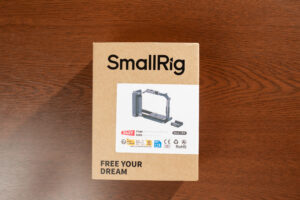
The included items are simple.
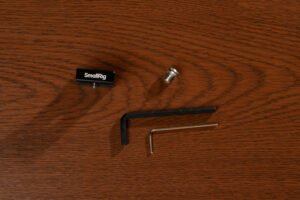
Besides the main cage, you get parts like cold shoe components.
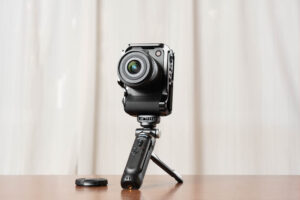
What changes when you install the cage? (Expandability)
From here, I’ll explain what the cage adds, and what accessories I use together with it.
1) Silicone grip
It was much better than I expected.
I was worried it would ruin the camera’s design, but once installed it feels surprisingly natural.
My remaining concern is heat dissipation. However, the EOS R50V’s original grip is rubber as well, so maybe the impact is minimal. I think this is something you can only judge after long-term use.
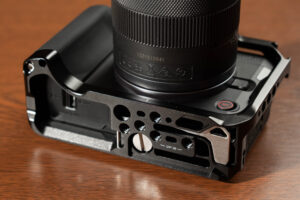
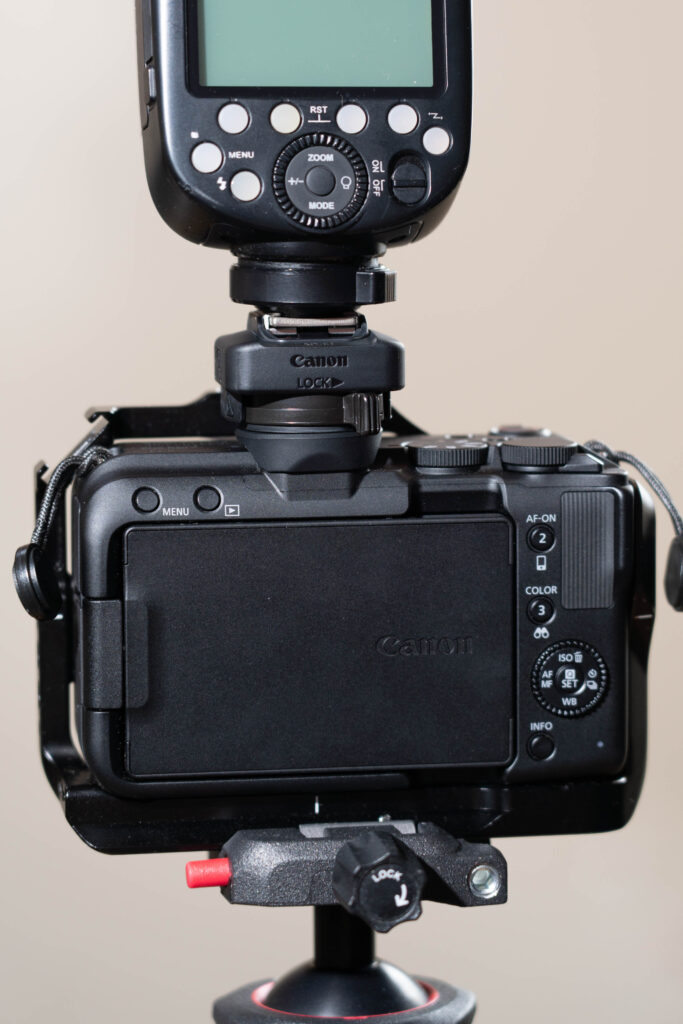
2) Arca‑Swiss compatible bottom plate
This is a big deal if you use tripods often.
In my setup, it worked with the tripod head below:
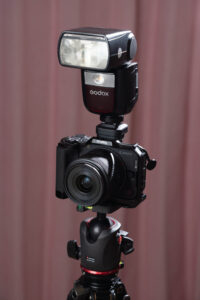
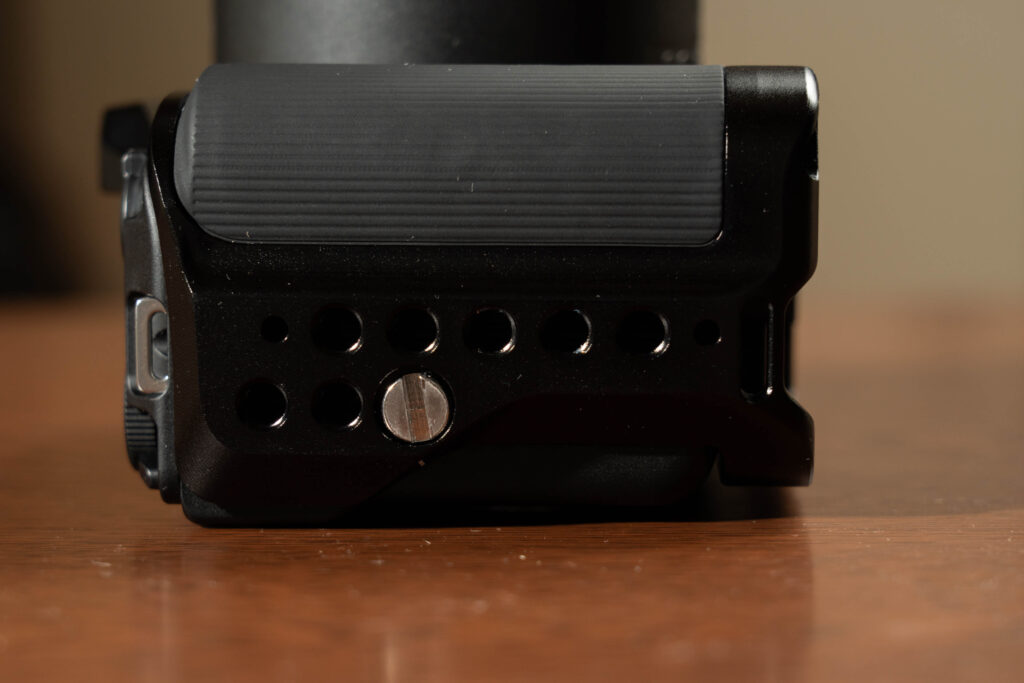
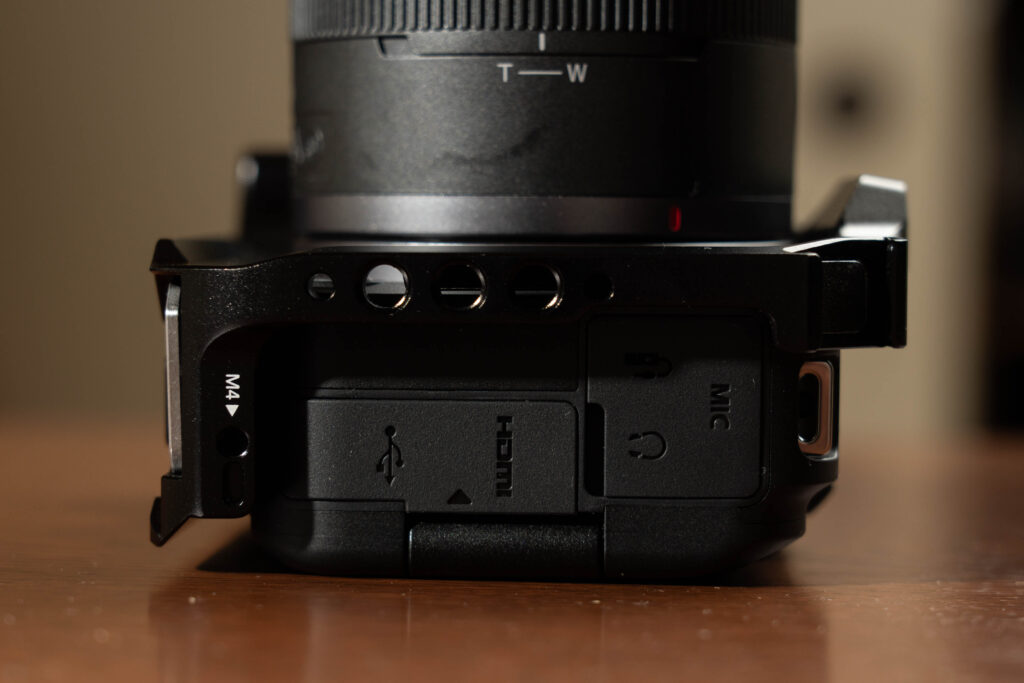
3) Side 1/4″ screw holes (useful for vertical video)
You can also shoot with ports facing downward. There are 1/4″ holes on both sides.
4) Handle mount (ARRI standard)
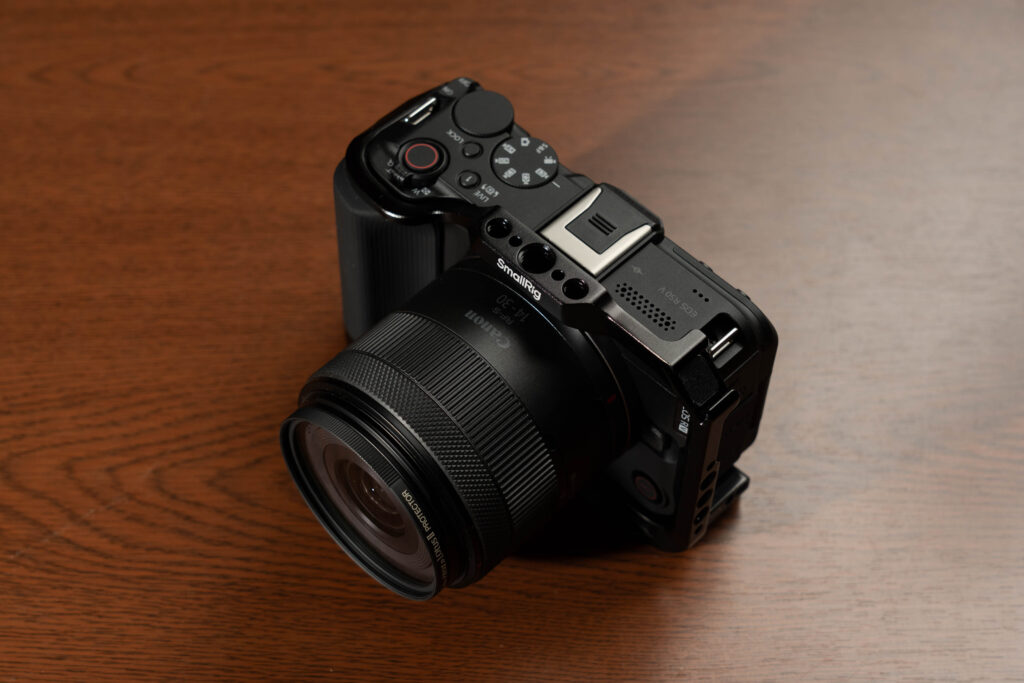
There is an ARRI standard hole on the top.
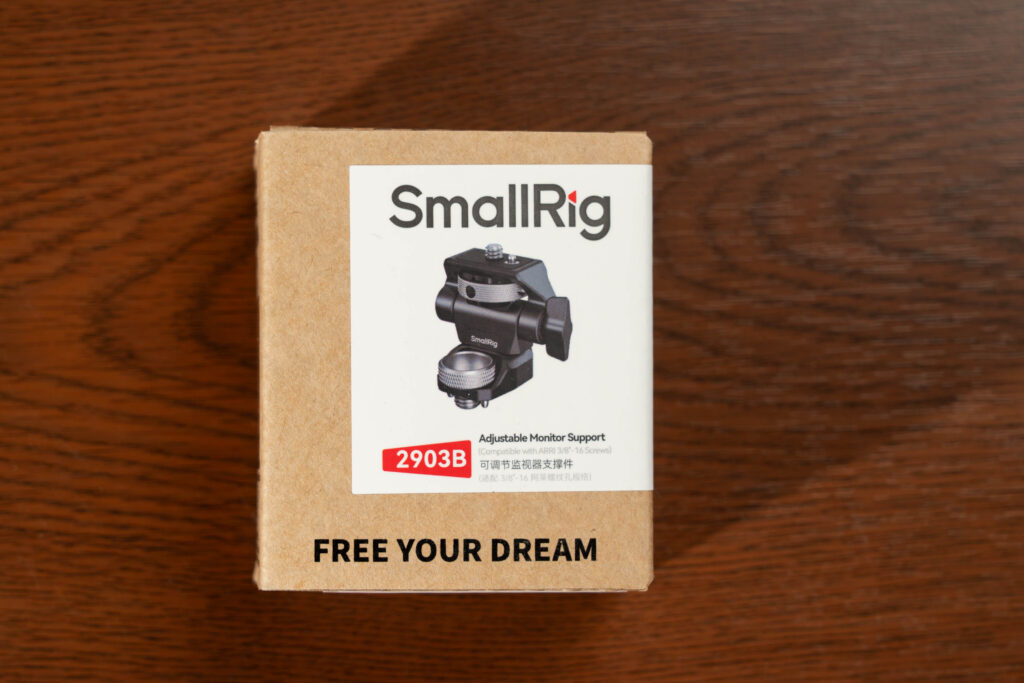
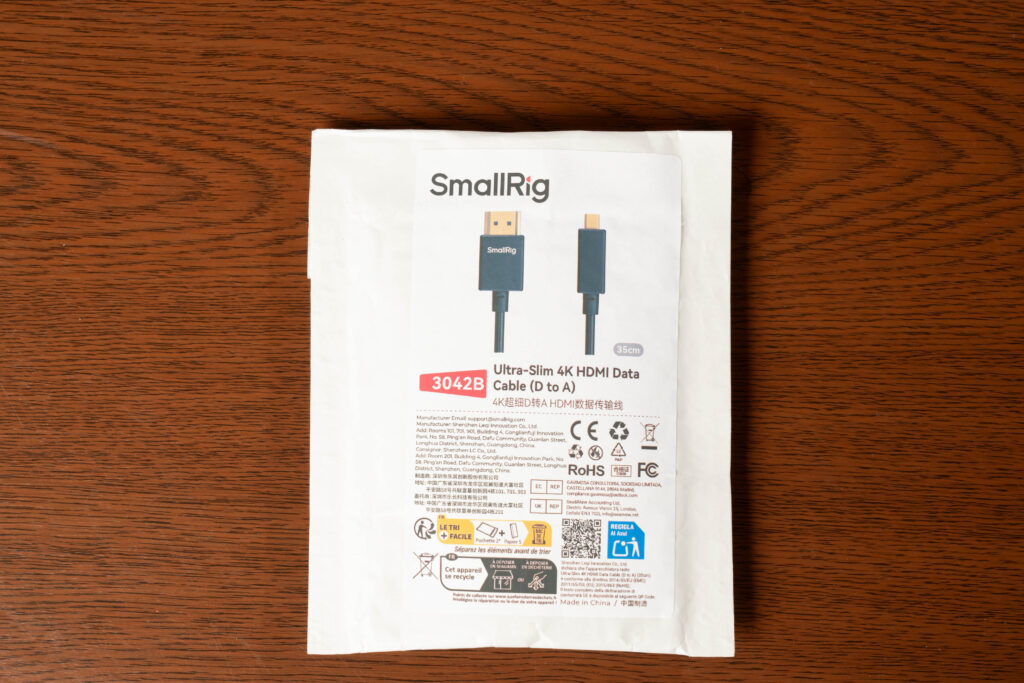
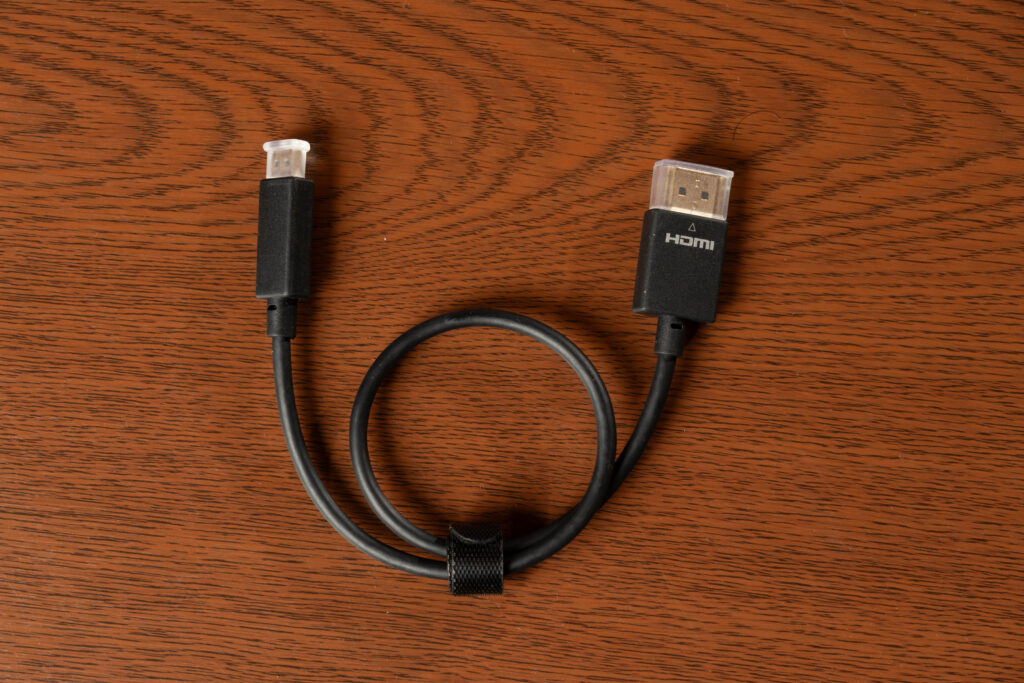
I’m not using a handle all the time, but I sometimes mount a monitor, so here are the related parts I use.
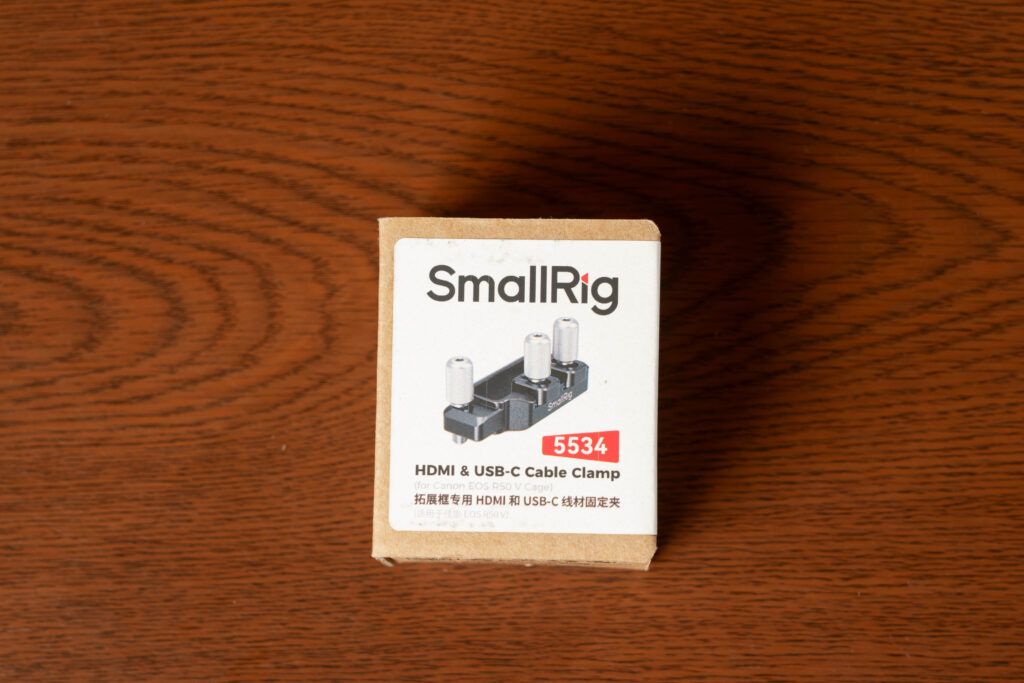
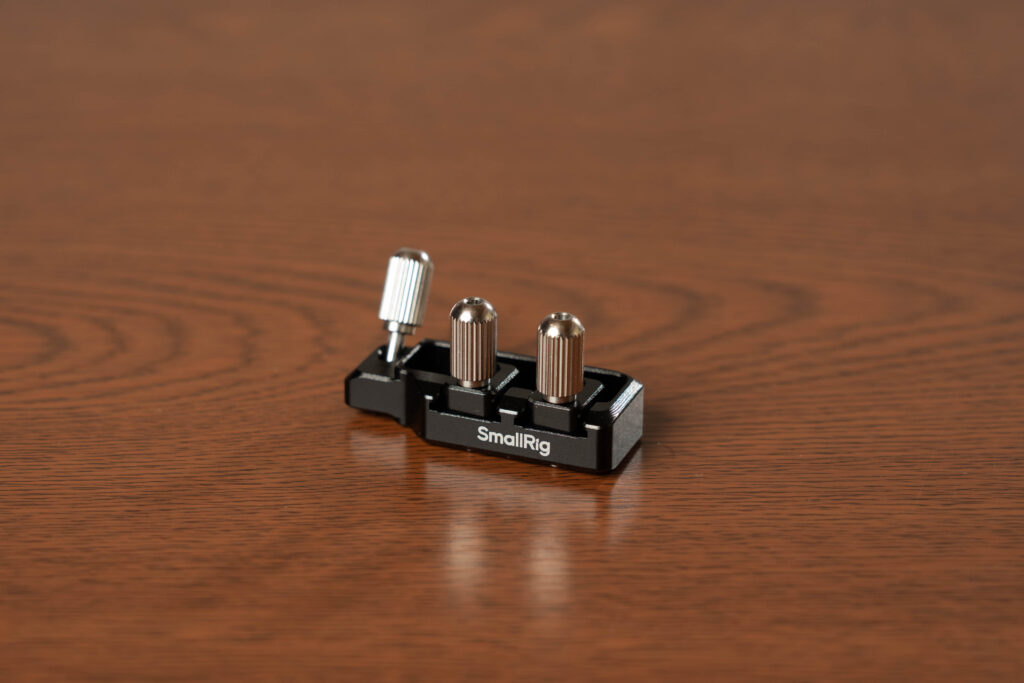
SmallRig HDMI & USB‑C Cable Clamp for Canon EOS R50 V cage 5534
Power accessories to use with the cage
The EOS R50V is compact and attractive, but the battery capacity is relatively small.
So you may want to use external power as an alternative to only using camera batteries.
Below are a few power options, assuming you’re using the SmallRig cage.
(Some parts overlap with separate articles about power accessories. Thank you for understanding.)
Recommended for stronger power: Canon DC Coupler DR‑E18
The EOS R50V can be powered via USB‑C, but as a more reliable option, you can use Canon’s official accessory: the DC Coupler DR‑E18.
Here I’ll cover two patterns:
- Powering with NP‑F compatible batteries
- Powering with a V‑mount battery
What is the DC Coupler DR‑E18?
A DC coupler is an accessory that supplies stable external power in place of a battery.
In the two methods below, you connect a third‑party battery to the coupler plug.
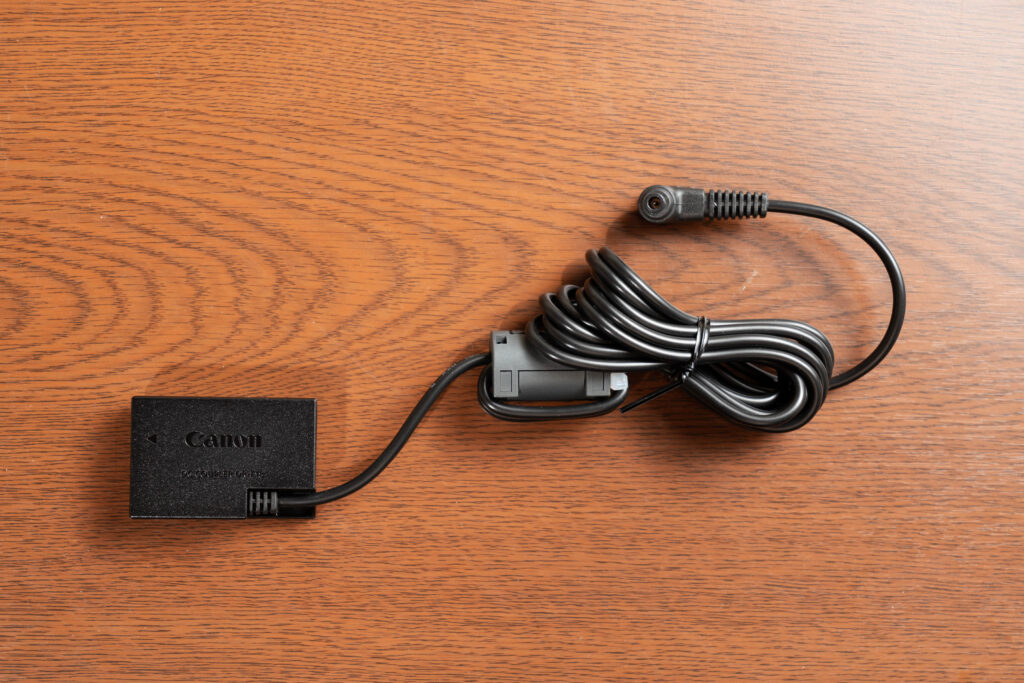
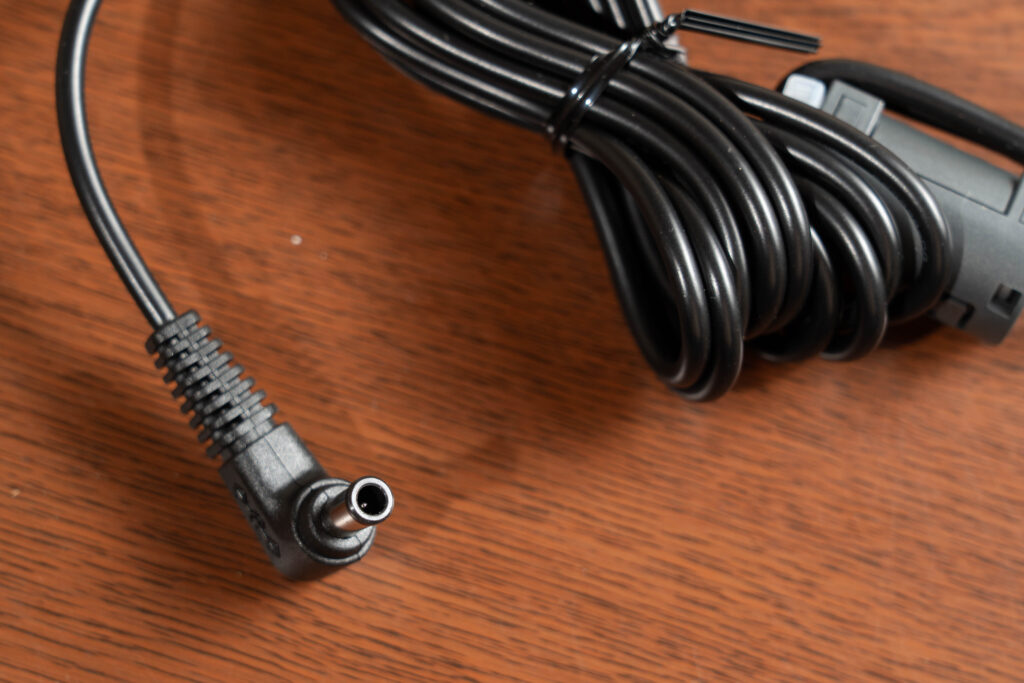
Canon officially describes the coupler mainly for AC adapters, but with a coupler you can power the camera from other batteries.
For example, Canon shows general examples of powering the EOS R5C using mobile batteries or V‑mount batteries:
- Reference: https://canon.jp/biz/product/camera/pro-imaging/cinema-eos/lineup/ces-camera/r5c/feature-style
However, this is not Canon’s officially recommended use. Please do it at your own risk. This site is not responsible for any issues caused by these methods.
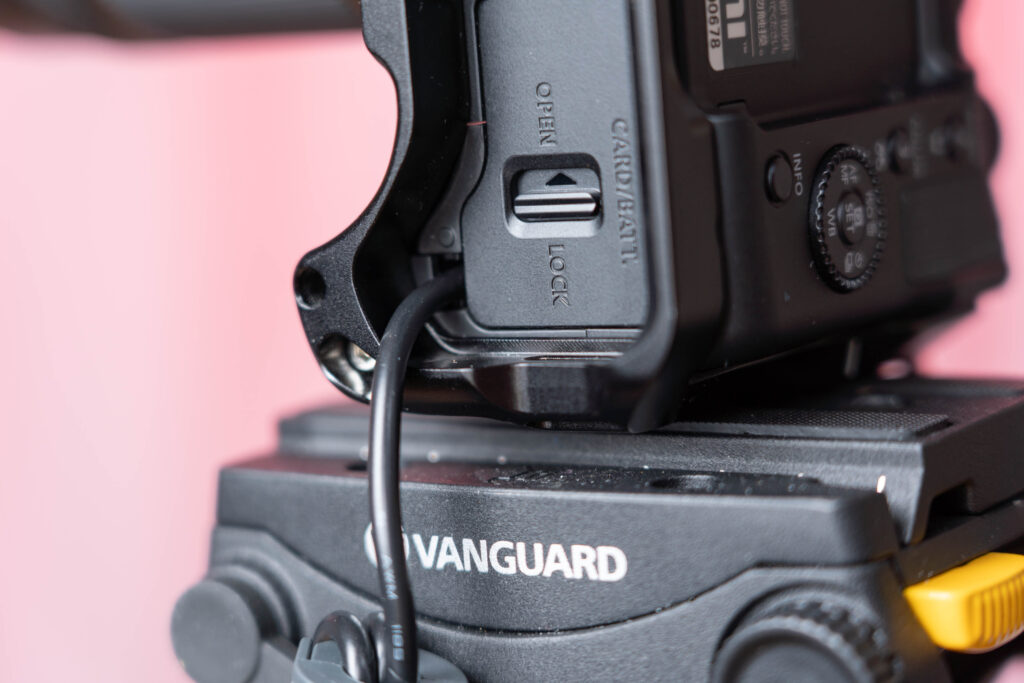
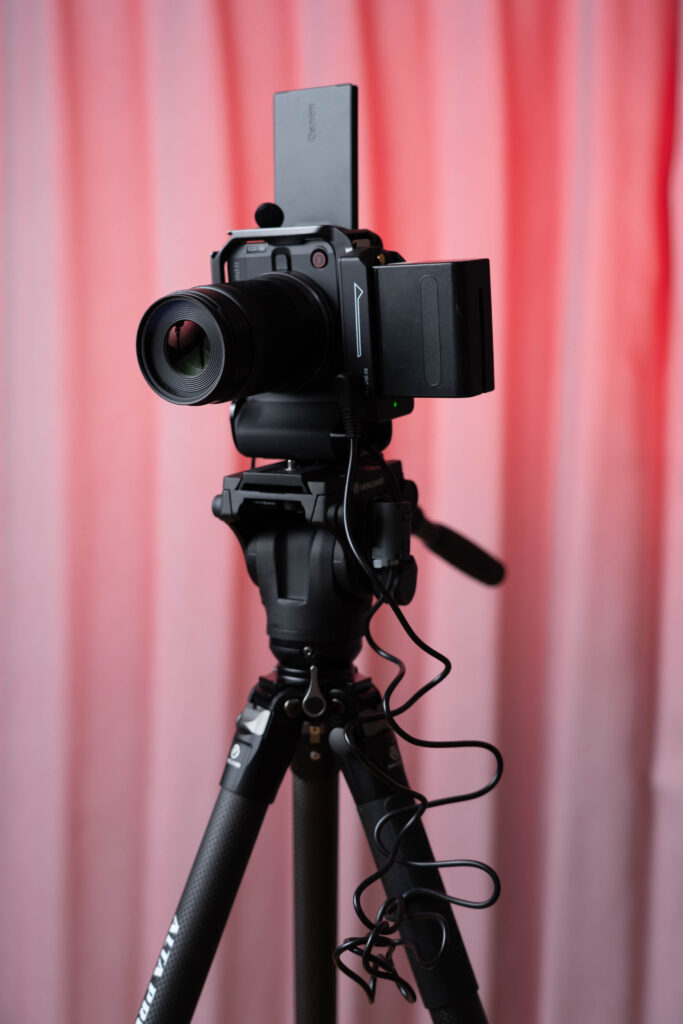
The EOS R50V has a notch near the grip that lets you route the DR‑E18 cable and close the battery door. For equipment protection, the camera will not power on unless the door is properly closed.
Pro: You can keep the camera’s USB‑C port available for other uses.
Con: The rubber seal area for routing the cable can slightly interfere with the cage, which makes me wonder whether it’s “perfectly okay” long term. It fits inside the cage, but it still feels like a minor concern.
DC Coupler + NP‑F battery
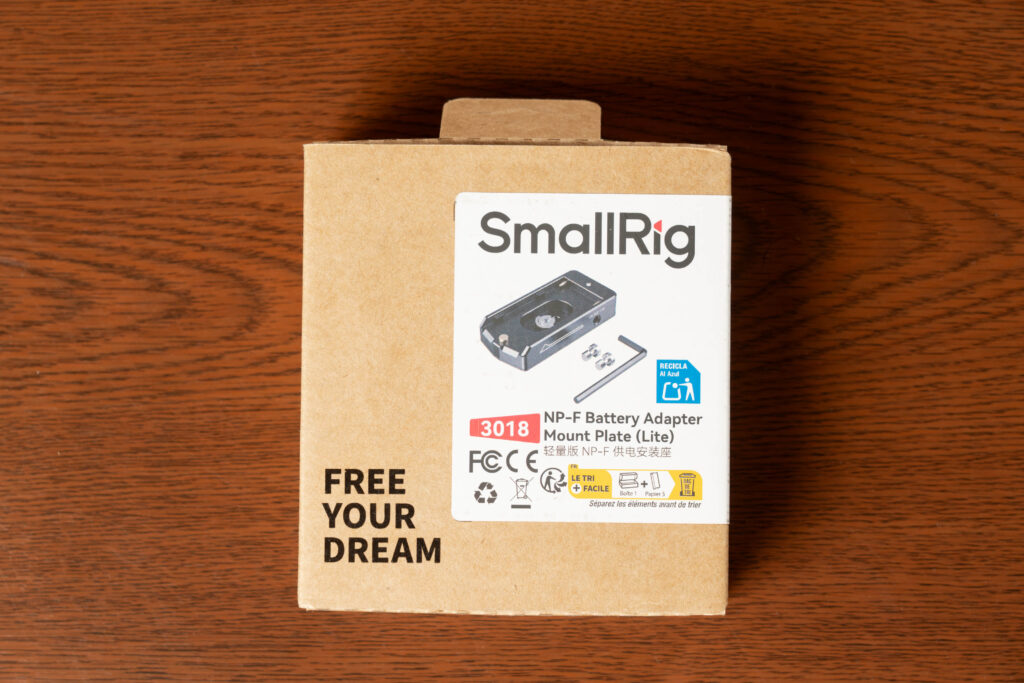
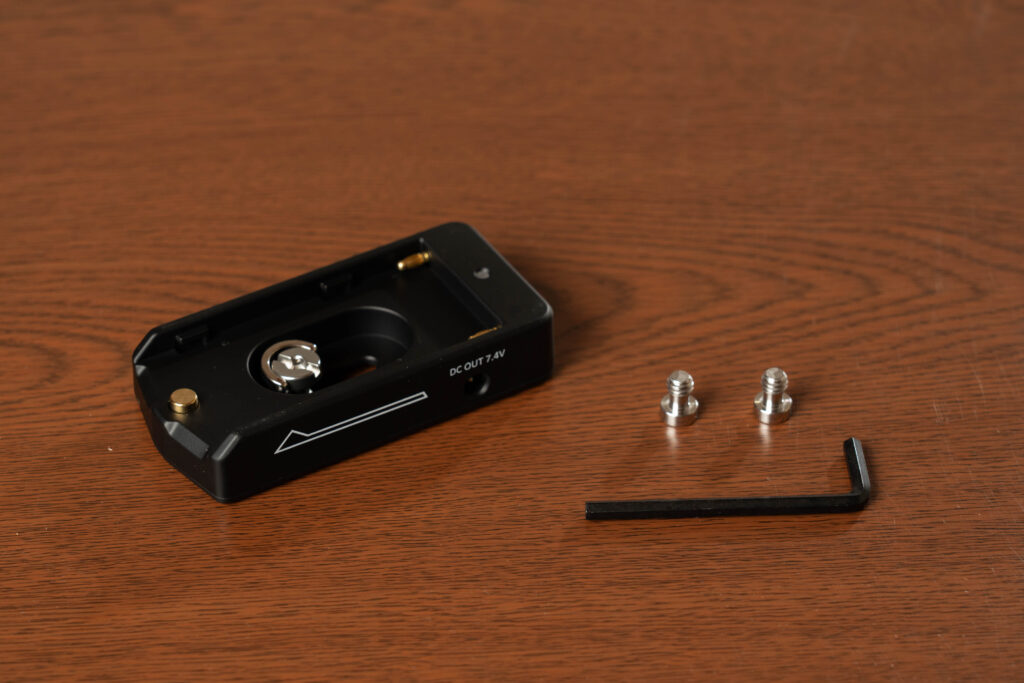
Attach an NP‑F battery.
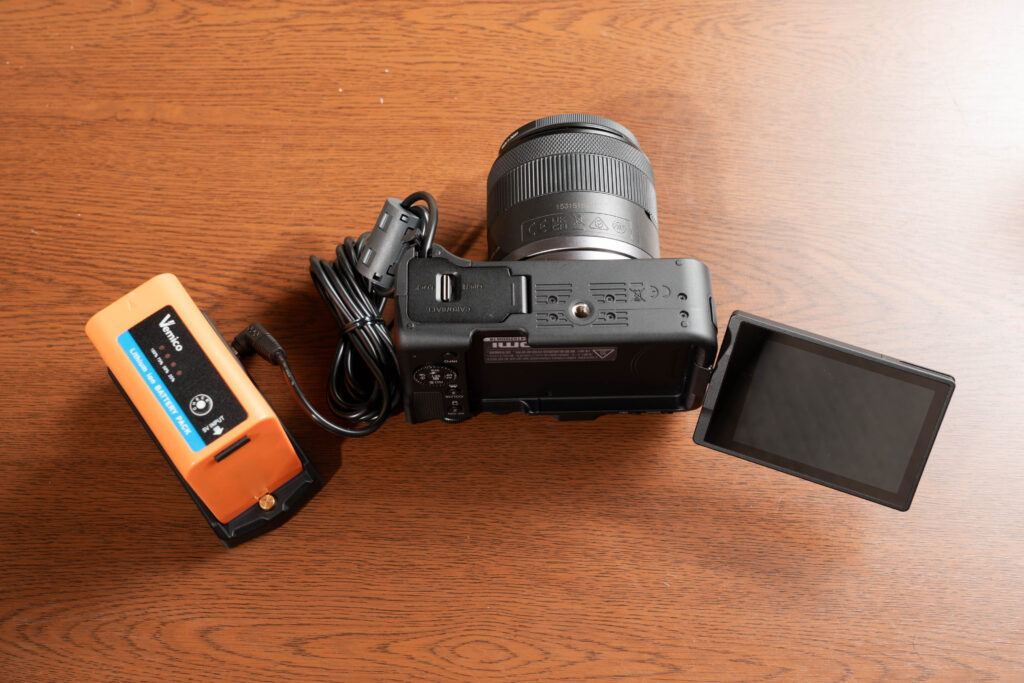
Mount an NP‑F (compatible) battery on the 3018 plate, then connect the coupler to the output labeled 7.4V.
Pros: you can use a large-capacity battery at a low cost. NP‑F batteries are commonly used across video gear (lights, external monitors/recorders, and some audio gear).
The LP‑E17 used by the EOS R50V is DC 7.2V / 1040mAh. NP‑F compatible batteries can exceed 10,000mAh, so the capacity difference is huge.
Caution: third‑party batteries vary widely in quality, and there is a risk of unexpected voltage drops that can stop the camera. With genuine LP‑E17 batteries, this is extremely rare.
I use NP‑F compatible batteries regularly and I’m not overly worried, but for important shoots, I recommend using a brand you trust.
V‑mount battery
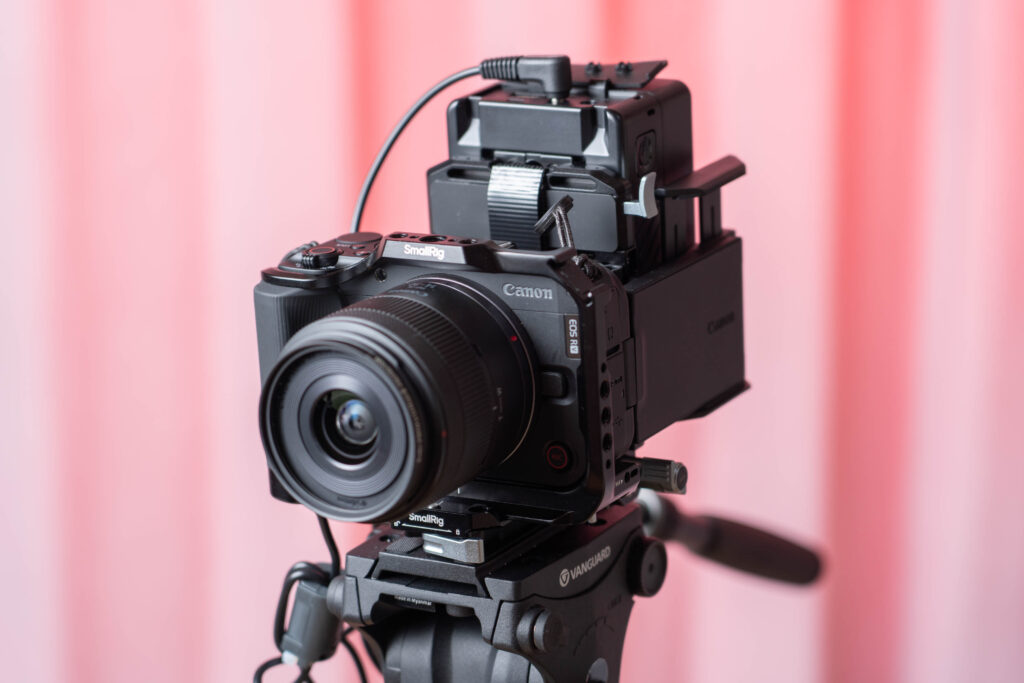
With the right parts, you can also run a V‑mount setup.
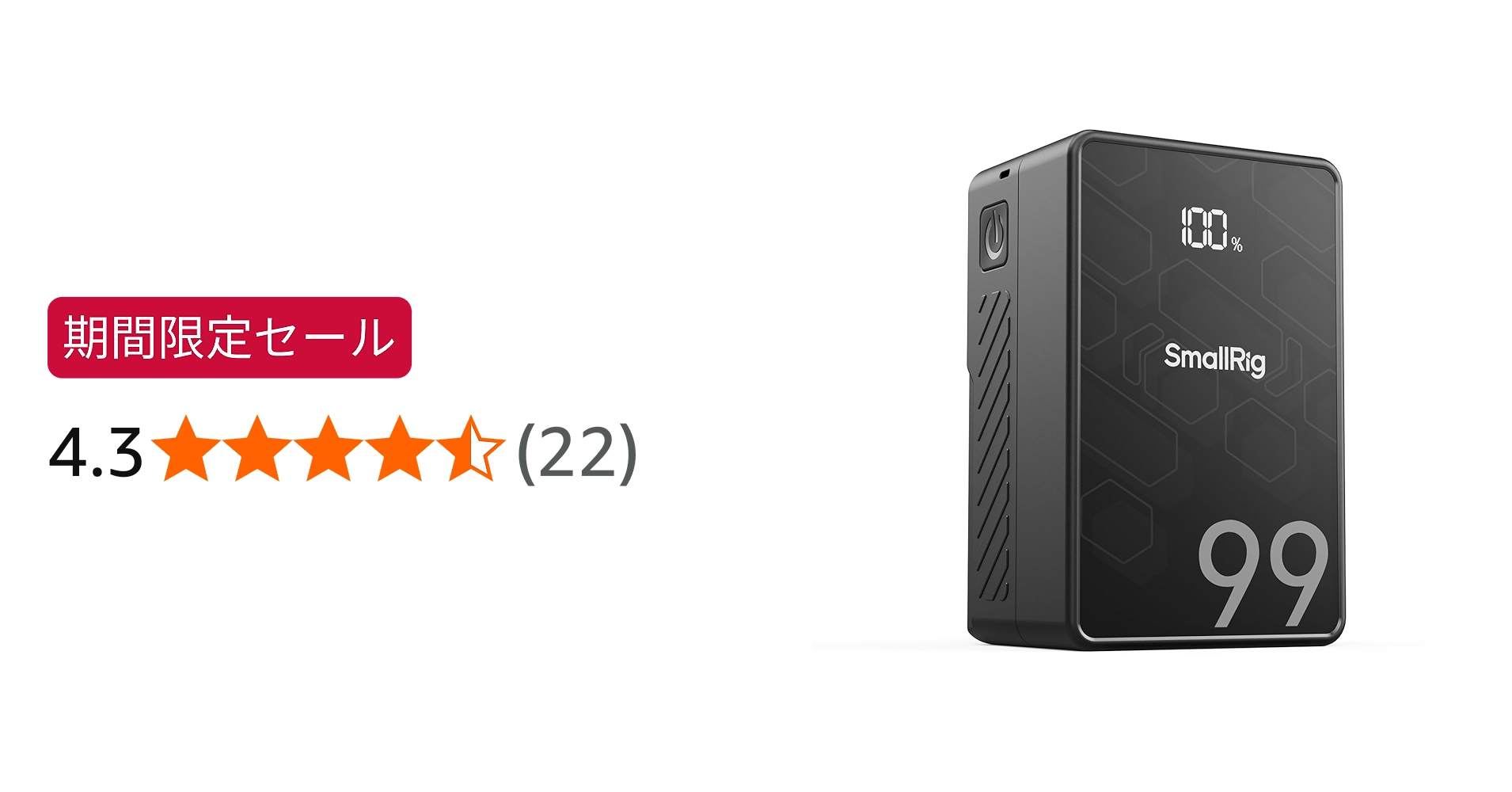
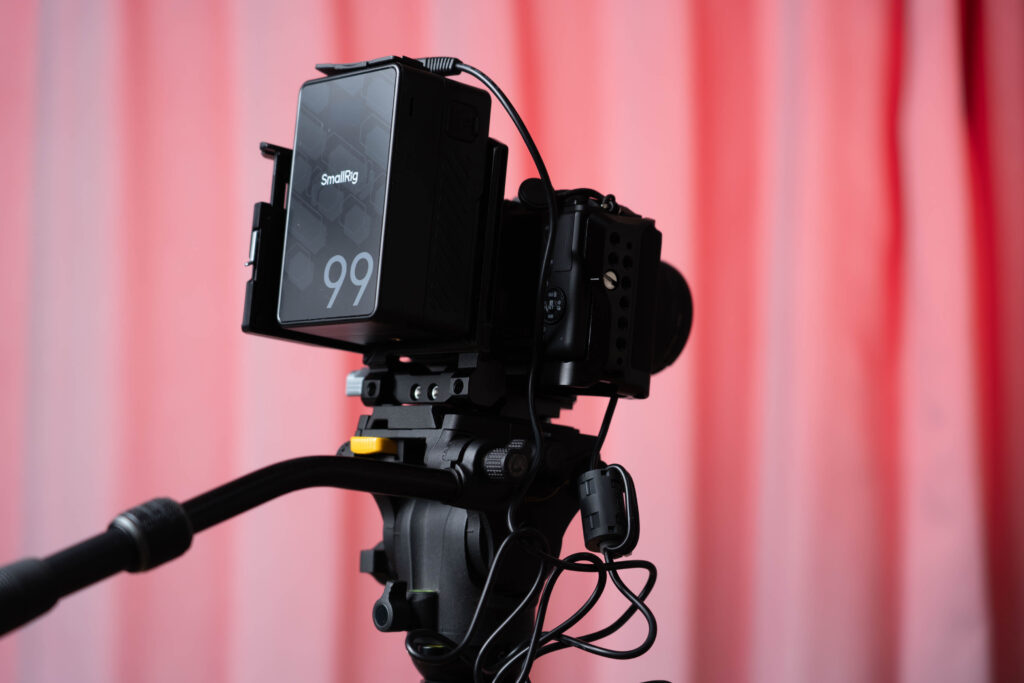
SmallRig VB99 SE Mini V‑Mount Battery 99Wh (4608)
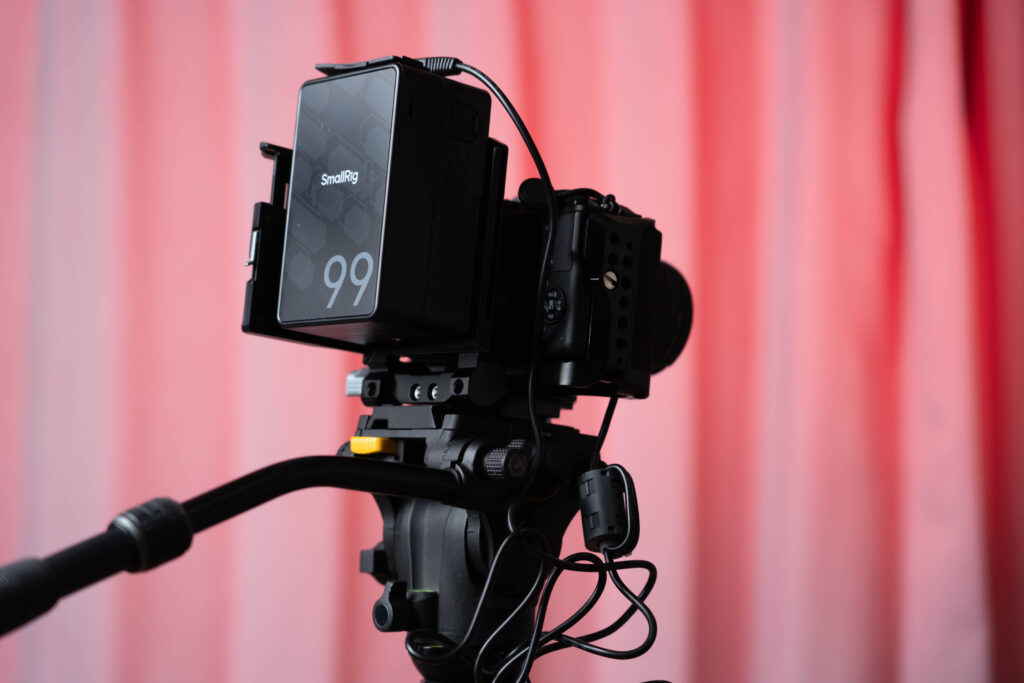
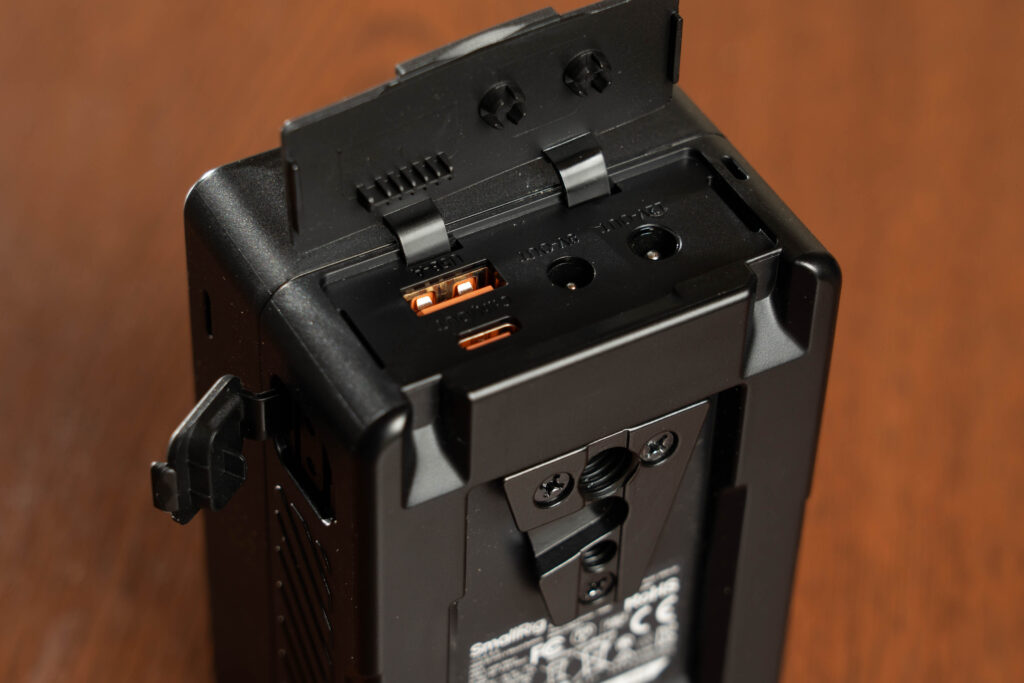
I use the SmallRig VB99 SE 4608.
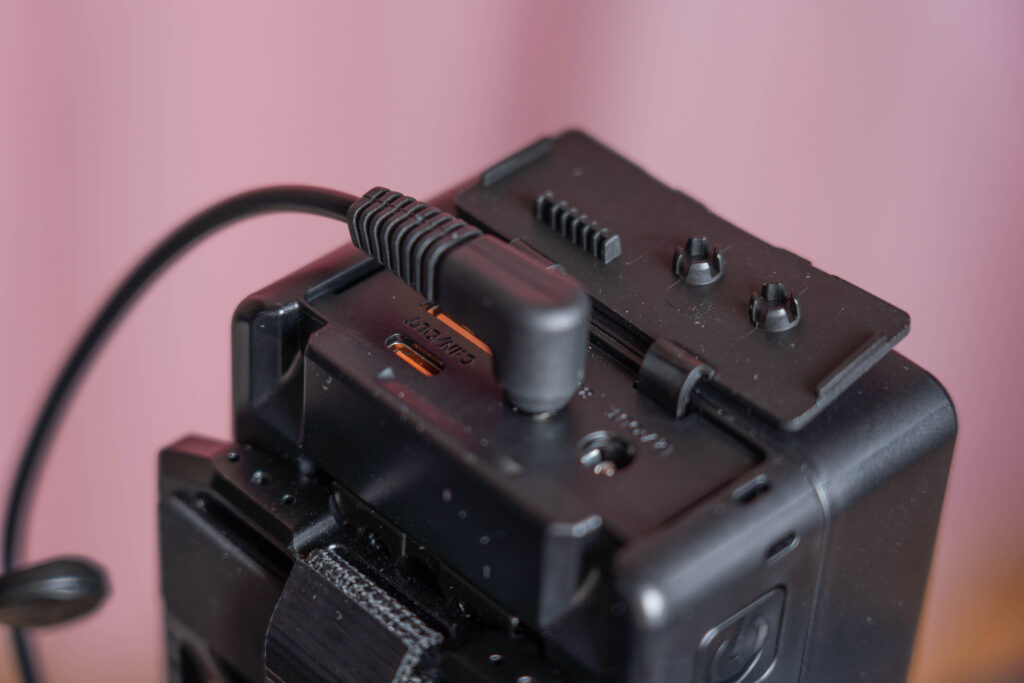
The VB99 SE can output up to 8V / 3A from its DC port. I connect the Canon DR‑E18 and power the camera directly. The pros/cons are the same as above.
For the V‑mount plate, I use a part like this:
About powering via mobile battery (USB‑C)
Personally, I don’t use a mobile battery. Simply because I feel the stability is not great.
That said, it’s convenient. If you can secure it well, it’s absolutely worth using.
Also, the V‑mount battery mentioned above has USB‑C output (PD up to 65W input/output). You can power the R50V via USB‑C while also using the internal battery.
The VB99 SE 4608 also supports D‑Tap output. If you need USB‑C PD for other devices, you could use a D‑Tap to USB‑C cable and power the R50V via USB as well.
Summary
What I like about the SmallRig cage is that it keeps the EOS R50V’s compact advantages while strengthening it in these areas:
- Arca‑Swiss compatible bottom
- Better grip
- More 1/4″ screw holes on all sides
For my workflow (tripod-heavy), the biggest win is the extra side 1/4″ holes.
Recommended.